Surrey, BC · Licensed Gas Fitters
Expert Boiler Installation Surrey, BC
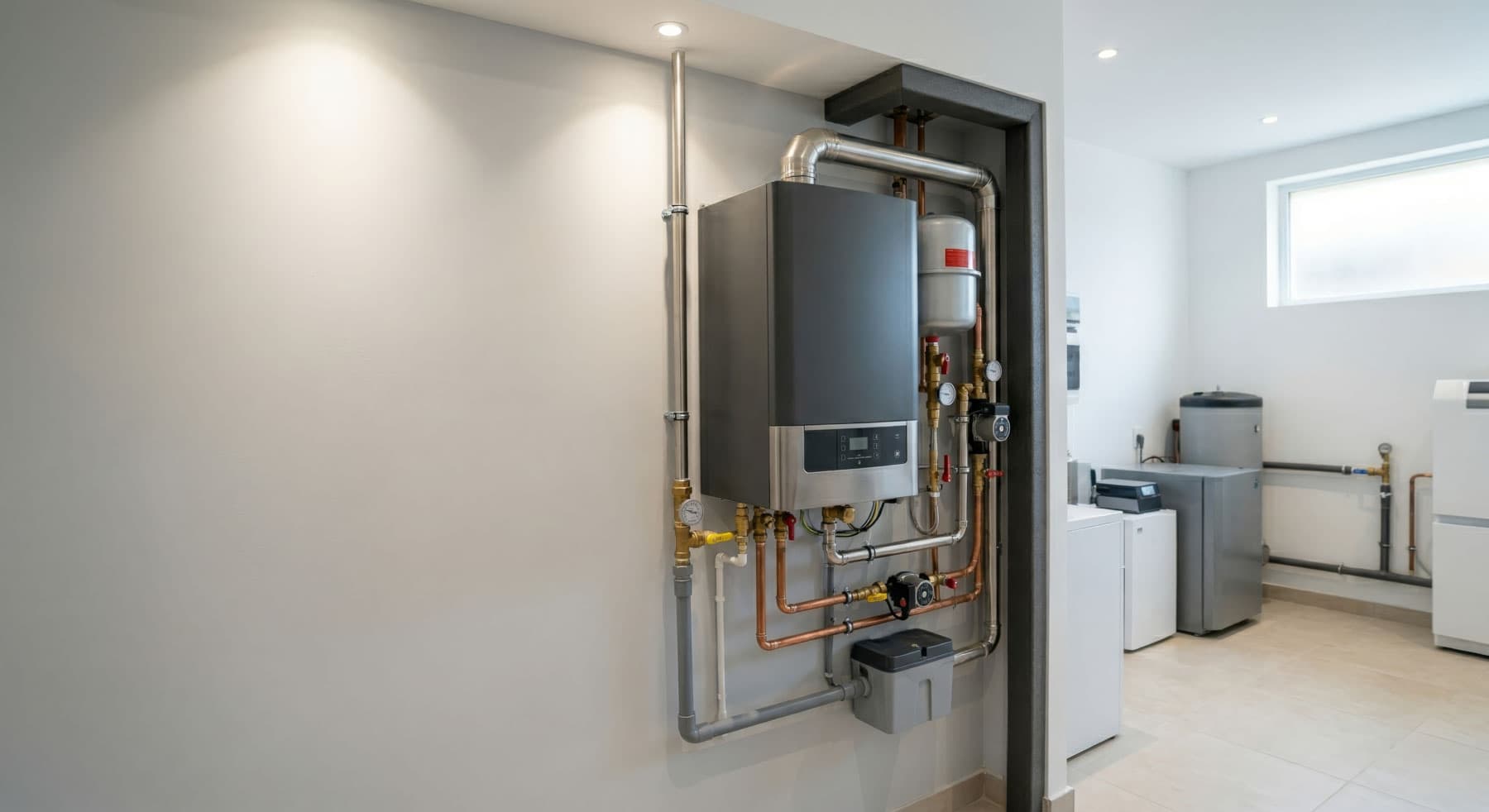
We install, repair, and service all boiler makes and models across Surrey and Metro Vancouver. Emergency boiler repair, annual boiler servicing, full boiler replacement, or a new hydronic heating system — residential and commercial.
What We Do
Professional Boiler Services
From new boiler installation to emergency repair, annual boiler servicing, gas line work, and commercial heating — we cover the full range of boiler services for Surrey homes and businesses.
- 01
Boiler Installation
Professional installation of gas, oil, and electric boilers for homes and businesses across Surrey.
- 02
Boiler Repair
Quick diagnosis and repair of all boiler makes and models. We get your heat back on fast.
- 03
Boiler Servicing & Maintenance
Keep your boiler running safely and efficiently with a professional annual service.
- 04
Boiler Replacement
Old boiler giving you trouble? We'll replace it with a high-efficiency system that cuts your heating bills.
- 05
Boiler Inspection
Comprehensive safety and efficiency inspections for residential and commercial boilers.
- 06
Radiant In-Floor Heating
Design and installation of hydronic radiant floor heating systems for new builds and renovations.
- 07
Hot Water Heating Systems
Installation and repair of boiler-based hot water heating for radiators, baseboards, and fan coils.
- 08
Gas Line Services
Licensed gas fitters for new gas line runs, appliance connections, and gas line repairs.
- 09
Emergency Boiler Repair
No heat? Boiler failed overnight? We respond to emergency boiler calls throughout Surrey, day and night.
- 10
Commercial Boiler Installation & Repair
Boiler installation, repair, and planned maintenance for commercial buildings, strata complexes, multi-family properties, and light industrial across Surrey and Metro Vancouver.
Why Choose Us
Proper boiler servicing
- Licensed BC Gas Fitters
- Every boiler service and installation is done by certified gas fitters licensed through BC Safety Authority. Not a shortcut, not a workaround.
- Same-Day Repairs
- We carry common parts on the truck. Most boiler repairs are done on the first visit. We don't leave you waiting.
- Upfront Pricing
- You get a clear price before we start. What we quote is what you pay.
- 14+ Years in Surrey
- We've been delivering boiler services in these neighbourhoods since 2012. We know the housing stock, the common problems, and the fastest fixes.
- Permits Handled
- We pull the BC Safety Authority permits and coordinate inspections on every boiler installation and major repair. You don't touch the paperwork.
- All Makes & Models
- We service every boiler brand and age — from older cast iron systems to modern high-efficiency combi units.
How It Works
Boiler installs & repair from A to Z
- 01
Call or message us
Tell us what's happening. We'll ask a few questions and figure out the fastest path forward.
- 02
On-site assessment
We come to you, look at the system, and give you a clear upfront price. No vague estimates.
- 03
We do the work
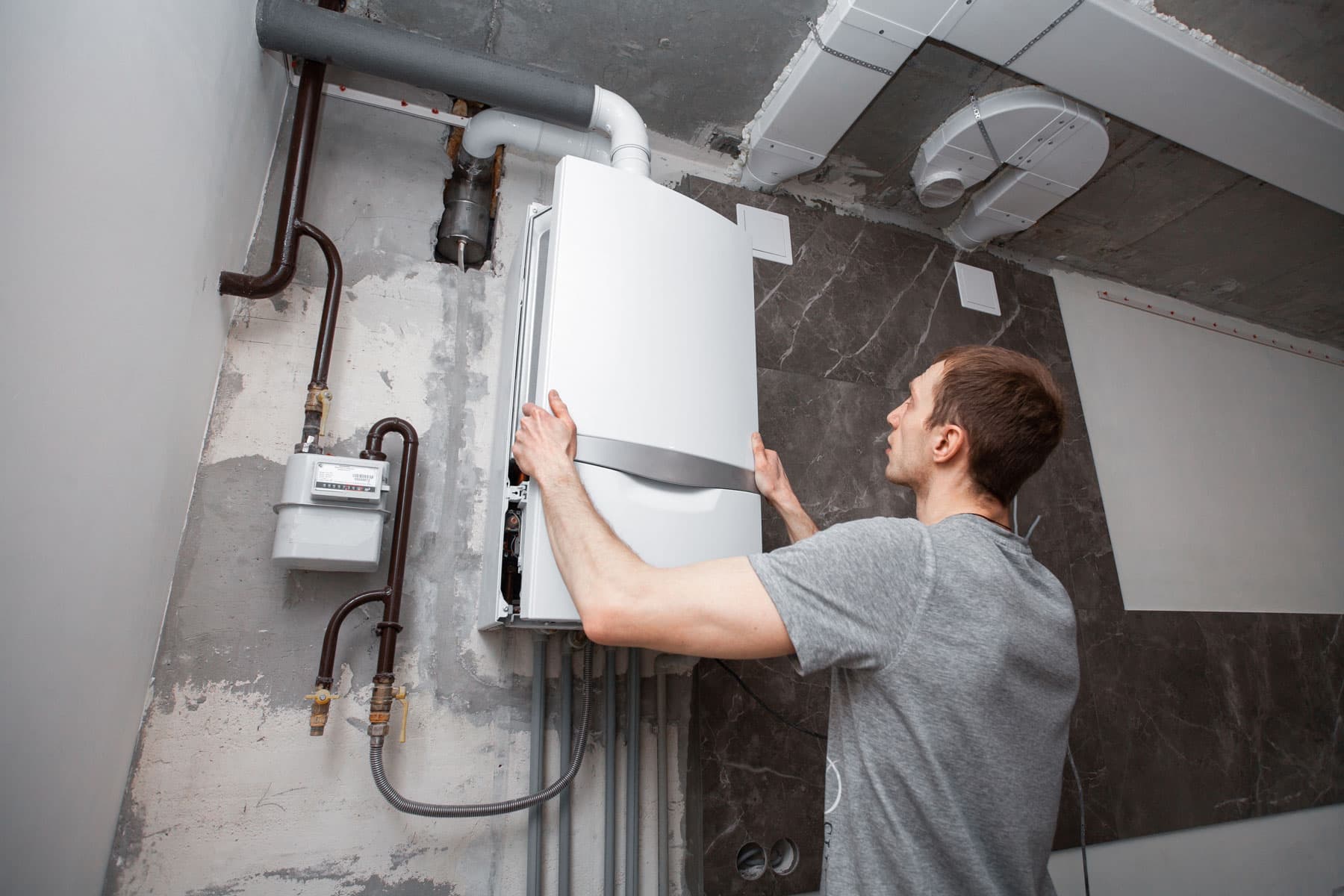
Licensed gas fitters, proper permits, BC Safety Authority standards. Done right the first time.
- 04
Test and sign-off
We test everything before we leave and walk you through the system so you know how it runs.
Boiler Brands
Boiler Brand Comparison
We install and service all major boiler brands. Here's an honest breakdown of the brands we work with most often, what they're good at, and where they fall short. No brand is perfect for every home, and the right choice depends on your setup, budget, and priorities.
Viessmann
Made in Germany
Vitodens 050, 100, 200
Strengths
- Industry-leading efficiency ratings, up to 98% AFUE on the Vitodens 200
- Inox-Radial stainless steel heat exchanger is highly corrosion-resistant
- Excellent modulation range means the boiler adjusts output precisely to demand, reducing short-cycling
- Long track record of reliability in European and Canadian markets
- Vitotronic controls are intuitive and have excellent diagnostic displays
Limitations
- Premium price point, often the most expensive option upfront
- Parts can be pricier than North American brands, though widely stocked
- Some older technicians are less familiar with the diagnostic system
Our Take
Our top recommendation for homeowners who want the best long-term performance and are comfortable with a higher upfront cost. The Vitodens 100 is our most commonly installed boiler in South Surrey and Langley custom homes.
Navien
Made in South Korea
NCB, NHB, NFB series
Strengths
- Navien combi boilers handle both space heating and domestic hot water in one compact unit, ideal for smaller homes
- Very competitive pricing compared to European brands at equivalent efficiency
- Strong parts availability across Metro Vancouver
- The NCB series has a good track record in the BC climate
- Built-in buffer tank on combi models reduces short-cycling on low-demand systems
Limitations
- Some early NCB models had ignition board reliability issues, though later revisions improved this significantly
- Domestic hot water output on combi models can be limited for homes with high simultaneous demand
- Customer service quality has been inconsistent for warranty claims
Our Take
A solid mid-range choice, particularly for the combi boiler market. Well-suited to Surrey townhomes and smaller detached homes where space is limited and a combined heating and hot water solution makes sense.
Rinnai
Made in Japan
Q Series, I Series boilers
Strengths
- Strong brand reputation built on decades of tankless water heater quality
- Q Series boilers have very good efficiency ratings and a clean control interface
- Parts and technical support are widely available in BC
- Well-suited to homes where the owner already trusts the Rinnai name from a water heater
- Good cold-climate performance on the Q Series
Limitations
- Boiler product line is narrower than Viessmann or Weil-McLain, with fewer options for complex applications
- Less common in commercial and multi-zone residential applications
- Some installers find the service access less convenient than European-designed units
Our Take
A reliable choice, particularly for homeowners upgrading from a Rinnai tankless system who want consistency across their mechanical room. Good everyday performer for standard Surrey residential applications.
Weil-McLain
Made in USA
ECO Tec, Ultra, CGa series
Strengths
- Long-established American brand with over 130 years of boiler manufacturing
- CGa cast iron series is exceptionally durable and well-suited to older hot water heating systems
- Ultra and ECO Tec condensing lines offer strong efficiency with robust construction
- Parts are widely available and many technicians are very familiar with the product line
- Good fit for commercial applications where proven reliability matters more than cutting-edge design
Limitations
- Cast iron series boilers are heavy and require more physical space than wall-hung units
- Less common in Metro Vancouver than in eastern Canada and the US, so local technician familiarity varies
- Higher-efficiency condensing models are competitive but not at the top of the AFUE range
Our Take
Our go-to recommendation for commercial boiler replacements and for older Surrey and Delta homes where a floor-standing cast iron unit is the right fit for the existing system.
Burnham
Made in USA
Alpine, ES2, IN series
Strengths
- Alpine condensing boiler is a strong performer at a competitive price
- Cast iron series is robust and compatible with older hot water distribution systems
- Good reputation for heat exchanger durability in North American installations
- Straightforward controls that most technicians find intuitive
- Reasonable parts costs compared to European brands
Limitations
- Less premium brand recognition than Viessmann or Navien in the BC market
- Efficiency ratings on mid-range models are competitive but not class-leading
- Fewer dealer and service points in Metro Vancouver compared to more heavily marketed brands
Our Take
A solid, honest boiler at a reasonable price. Good choice for straightforward residential replacements in Burnaby, New Westminster, and Delta where budget matters and a proven North American product is preferred.
Worcester Bosch
Made in UK (Bosch Group)
Greenstar series
Strengths
- Greenstar series has an outstanding reliability record in the UK market and growing presence in Canada
- Very compact wall-hung design is ideal for tight boiler rooms in Surrey townhomes and condos
- Excellent AFUE ratings, comparable to Viessmann on top models
- Bosch engineering and parts backing provides confidence in long-term support
- Clean, straightforward controls and good diagnostic display
Limitations
- Less common in BC than in eastern Canada, so some technicians have limited experience with the product
- Local parts stocking can be less comprehensive than for Navien or Rinnai
- Limited commercial product range in the Canadian market
Our Take
An underrated option in the Metro Vancouver market. If you have a tight space and want European engineering at a slightly lower price point than Viessmann, the Greenstar is worth considering.
Not sure which brand is right for your home? We'll give you a straight recommendation based on your home's heating load, the existing distribution system, your budget, and how long you plan to stay in the property. Call us and we'll talk through it.
Technical Reference
How Boilers Work
Understanding the engineering behind your heating system helps you make better decisions about servicing, repairs, and replacements. Here's a plain-language breakdown of how boilers work and the components that matter most.
How a Gas Boiler Works
A gas boiler is a closed-loop heat exchanger. A gas burner fires inside a sealed combustion chamber, heating a heat exchanger through which water circulates. The heated water is pumped through the distribution system, releasing heat at each terminal unit (baseboard convector, panel radiator, or radiant floor loop) before returning to the boiler to be reheated. Modern condensing boilers extract additional heat from the exhaust gases by cooling them below the dew point, causing water vapour in the flue gases to condense and release latent heat. This recovered latent heat is why condensing boilers can achieve AFUE ratings above 90%, compared to the 78-82% achievable in a non-condensing atmospheric boiler.
AFUE Ratings Explained
AFUE stands for Annual Fuel Utilization Efficiency. It represents what percentage of the fuel energy consumed actually gets converted to useful heat in your home. A boiler rated at 80% AFUE means 20% of the gas burned is lost, primarily up the flue as waste heat. A 95% AFUE condensing boiler loses only 5%. In BC where natural gas costs are significant, the difference between an 80% and a 95% boiler on a typical Surrey home translates to roughly 15-18% lower annual heating costs. The BC Building Code requires a minimum 90% AFUE for new boiler installations in most applications, which is why all new installations we do involve condensing technology. Older 80% boilers remain in operation on replacement-in-kind permits only.
Condensing vs Non-Condensing Boilers
Non-condensing boilers operate with high flue gas temperatures, typically 180-220°C at the exhaust, which prevents condensation in the heat exchanger. These use standard metal flue venting and require a Category I or Category III vent connector. Condensing boilers drop flue gas temperatures to 40-65°C, well below the dew point of about 55°C for natural gas combustion products, causing condensate to form. This condensate is mildly acidic (pH 3-4) and must drain to a floor drain or condensate neutralizer. Condensing boilers require PVC or CPVC plastic vent pipe rather than metal, since the low exhaust temperature means direct PVC venting through sidewalls or roofs is suitable. The return water temperature also matters: condensing operation only occurs when the return water temperature stays below approximately 54°C. A boiler controlled to return temperatures above this will technically run as a non-condensing unit despite being rated as a condensing boiler.
Primary and Secondary Circuits
In a primary-secondary piping arrangement, two separate hydraulically isolated circuits are connected through common piping. The primary circuit circulates water through the boiler continuously at a constant flow rate set by the system design. The secondary circuit connects the heating zones, each with its own circulator pump. The two circuits exchange heat at the common connection without interfering with each other's flow rates. This arrangement allows each zone to run independently, protects the boiler from low-flow conditions, and prevents short-cycling caused by high-head pressure drops in complex zone systems. It's the standard approach for multi-zone Surrey homes with radiant floor, baseboard, and fan coil zones running simultaneously from one boiler.
Expansion Tanks
Water expands when heated. A closed hydronic system without an expansion tank would see dangerous pressure spikes every time the boiler fires. The expansion tank contains a pre-charged air bladder separated from the system water by a flexible diaphragm. As system water expands, it compresses the air charge, absorbing the pressure increase. Expansion tanks are sized based on system volume and operating temperature range. An undersized expansion tank or one with a failed bladder will cause the pressure relief valve to discharge on every heating cycle, which is a common symptom homeowners notice as a puddle under the boiler or a pressure gauge that reads high when the system is warm. Replacing an expansion tank is a standard part of many boiler service calls.
Zone Valves and Zone Controls
Zone valves are electrically actuated valves that open and close individual heating zones in response to thermostat demand. The most common type is a two-position motorized valve with an end switch that signals the boiler to fire when at least one zone is open. Zone valves fail in two typical ways: the actuator motor seizes, leaving the valve stuck open or closed, or the end switch fails, preventing the boiler from getting the call-for-heat signal. A zone stuck open causes that part of the house to heat continuously regardless of thermostat setting. A failed end switch means that zone calls for heat but the boiler never fires. Both are diagnosable in minutes with a multimeter and are straightforward repairs.
Circulator Pumps
Circulator pumps move heated water through the distribution system. Modern residential circulators are wet-rotor type, meaning the motor rotor spins in the system water, providing inherent lubrication and eliminating shaft seals that can fail. Variable-speed circulators, now standard in modern installs, adjust flow rate to match actual zone demand rather than running at a fixed speed regardless of how many zones are active. This reduces electricity consumption significantly on part-load operation. Circulator pump failure typically presents as either no flow (seized impeller) or excessive noise (worn bearings or cavitation from low system pressure). Both conditions prevent heat from reaching the distribution system even when the boiler itself is firing normally.
Pressure Relief Valves
Every boiler is required by BC Safety Authority standards to have a pressure relief valve (PRV) rated to open before system pressure exceeds the boiler's maximum allowable working pressure, typically 30 PSI for residential systems. The PRV is a passive safety device: it requires no power and no control signal to operate. If system pressure rises above the set point (15 PSI is standard for most residential systems), the valve opens and discharges water until pressure drops. A PRV that discharges frequently indicates an underlying problem, usually an undersized or failed expansion tank, not a defective PRV. Replacing a PRV without addressing the root cause of excessive pressure will result in the new valve doing exactly the same thing.
Heat Load Calculation and Boiler Sizing
Proper boiler sizing requires a Manual J or equivalent heat loss calculation for the building. The calculation considers the home's envelope construction, insulation values, window areas and types, air infiltration rate, ceiling heights, and the design outdoor temperature for the location. Surrey's design outdoor temperature is approximately -9°C. The result is the building's design heat loss in BTU/h or watts, which defines the minimum boiler output needed to maintain the design indoor temperature on the coldest day of the year. Oversizing a boiler is a common installation error that leads to short-cycling, reduced efficiency, and accelerated heat exchanger wear. An 80,000 BTU/h boiler in a home with a 45,000 BTU/h heat loss will fire briefly, overshoot the setpoint, shut off, and repeat this cycle dozens of times per hour rather than running in a sustained efficient burn. Proper sizing matters as much as brand selection.
Gas Supply and Manifold Pressure
Natural gas in Metro Vancouver is delivered by FortisBC at a supply pressure of approximately 0.25 PSI (7 inches water column) at the meter. The boiler's gas valve reduces this to the manifold pressure required by the burner, typically 3.5 inches water column for natural gas. This manifold pressure determines the gas-air mixture ratio at the burner and directly affects combustion quality and emissions. An incorrect manifold pressure causes either incomplete combustion (rich mixture, producing CO) or excess air (lean mixture, reducing efficiency and potentially causing ignition problems). Manifold pressure is checked with a manometer during commissioning and at every annual service. Pressure drift is a sign of a failing gas valve.
Have a question about your specific system that isn't covered here? Call us any time. We're happy to explain what's going on with your boiler in plain language before we do any work.
Call (604) 200-8397Diagnostics
Common Boiler Error Codes
Most boiler lockouts come down to a handful of repeat offenders. Here are the codes we see most often on Surrey service calls, and what they mean. For a full list filterable by brand, see the link below.
Ignition Failure
No flame detected after three ignition attempts. Usually caused by low gas pressure, a dirty igniter, or a faulty gas valve. Check that your gas supply is on and other gas appliances work.
Overheat Limit Tripped
The heat exchanger has exceeded its safe temperature. Often caused by low water flow, a clogged filter, or a failing circulation pump. Don't reset repeatedly — get it checked.
Ignition Lockout
No ignition after multiple attempts. Could be a gas supply issue, faulty igniter electrode, or a wiring fault. Requires a manual reset — but if it trips again, call a tech.
Safety Limit Activated
The boiler has shut down due to overheating or a blocked flue. Check for obvious flue obstructions. This fault won't clear until the root cause is fixed.
Venting / Flue Blockage
Exhaust gases can't vent properly. Check the flue terminal outside — birds' nests, ice, or debris are common culprits in BC winters.
No Ignition
Burner failed to light. Check gas supply first. If gas is flowing normally, the igniter or flame sensor may need cleaning or replacement.
Combustion Fan Fault
The fan that pushes exhaust gases out isn't running at the correct speed. Could be a failing fan motor or a blocked flue. Don't operate the boiler until resolved.
Pressure Below 1 Bar
The system pressure has dropped below operating range (typically 1–1.5 bar). Repressurise via the filling loop. If it drops again within days, you likely have a leak or a failed expansion tank.
Pressure Above 3 Bar
The system is over-pressurised. This usually means the expansion vessel has failed and needs replacing. Don't keep resetting — excess pressure can damage the heat exchanger.
Not sure what your code means? Call us and we'll walk you through it.
Local Knowledge
Surrey Neighbourhoods, Homes, and Boiler Tips
Surrey is not one housing market. A Cloverdale heritage home on Fraser Highway is a different job than a Morgan Creek estate or a Guildford tower. Here's what we actually see in each area, and the advice we give homeowners on the call.
South Surrey
Landmarks
Morgan Creek Golf Course, Grandview Heights, Peace Arch Provincial Park, Crescent Park
Homes
Custom estate homes in Morgan Creek and Grandview Heights, plus 1970s ranchers around Crescent Park. A lot of the newer builds have multi-zone radiant floors and a high-output condensing boiler.
Local tip
If your main floor has cold spots, the manifold is usually out of balance. Don't keep turning the thermostat up. Get the loops flushed and set properly.
Cloverdale
Landmarks
Historic Cloverdale townsite, Cloverdale Rodeo grounds, Fraser Highway, Hazelgrove
Homes
Heritage homes along 64th Avenue and Fraser Highway still run cast iron radiators. Post-war bungalows and newer infill sit right beside them. Oil-to-gas conversions are common here.
Local tip
You can keep original radiators when you replace the boiler. The new unit just needs the right flow temperature so the old iron still puts out heat.
Fleetwood
Landmarks
Fleetwood Park, Enver Creek, Fleetwood Town Centre, 160th Street
Homes
1970s detached homes on larger lots near the park, plus townhome strata from the 1990s and 2000s. Shared central plants and individual unit boilers both show up here.
Local tip
If a Fleetwood townhome keeps losing pressure, check the expansion tank first. Strata buildings often share one plant, so one leak can drop pressure for several units.
Guildford
Landmarks
Guildford Town Centre, 104th Avenue, Tannin Hill, Hjorth Road
Homes
High-rise and mid-rise towers around the mall, older apartments with central boiler plants, and 1970s single-family homes north toward 108th Avenue.
Local tip
In older Guildford apartments, a no-heat call is often the central plant, not your suite. Property managers should book the building, not each tenant separately.
Newton
Landmarks
King George Boulevard, Strawberry Hill, Kwantlen Polytechnic University, 72nd Avenue
Homes
1950s and 1960s post-war homes near Strawberry Hill, mid-vintage gas boilers through central Newton, and newer subdivisions toward Cloverdale. Highest boiler density in Surrey.
Local tip
A lot of older Newton homes started on oil. If you still have a tank, budget for decommissioning when you switch to gas. We handle the boiler side and point you to the tank work.
Whalley / City Centre
Landmarks
SFU Surrey, King George SkyTrain, Central City, King George Hub
Homes
1960s walk-up apartments with aging central plants along 135A Street, plus new condo towers near the Hub with in-suite or building-wide systems.
Local tip
Older Whalley rental buildings often run 30-year-old equipment on a thin maintenance budget. If the plant fails in January, replacement planning should already be on paper.
Clayton Heights
Landmarks
Clayton Village, 188th Street, 64th Avenue, Willowbrook border
Homes
Early 2000s detached homes now hitting boiler replacement age, plus newer custom builds with radiant floors and high-efficiency combis.
Local tip
A 2003 Clayton boiler is around 20 years old. If you've had two repair calls in two years, replacement usually costs less than another round of parts.
Ocean Park
Landmarks
Crescent Beach, Marine Drive, 128th Street, Semiahmoo Bay
Homes
Older character homes along the water and newer custom builds on the higher streets. Salt air in crawl spaces wears flues and casings faster than inland homes.
Local tip
Book a flue check every year if you're within a few blocks of the water. Corrosion here looks minor until it isn't, and that's a carbon monoxide risk.
White Rock
Landmarks
White Rock Pier, Marine Drive promenade, Johnston Road, Peace Arch Hospital
Homes
1940s to 1960s character homes on the bluff above the beach, plus newer condos along Johnston Road and Pacific Avenue. Two completely different heating profiles in one small city.
Local tip
Lower White Rock boilers near the pier need extra attention on flue elbows and heat exchangers. Salt air shortens component life compared with uptown.
Coverage
Boiler Service across Surrey and Metro Vancouver
We deliver boiler services across all of Surrey's neighbourhoods and the surrounding cities. If you're within 75km of Surrey, we can help.
Full coverage details →Surrey Neighbourhoods
FAQ
Common boiler questions
Ready to book?
Need a boiler install, repair
or servicing in Surrey?
Call us or send a message. We respond fast and give you straight answers. 4.9★ on Google · 16 reviews · 14+ years serving Surrey.