British Columbia
Boiler Installation & Repair in Port Coquitlam, BC
Surrey Boiler Pros serves Port Coquitlam for boiler installation, repair, and servicing. Licensed gas fitters ready when you need them.
(604) 200-8397Boiler Services in Port Coquitlam
Port Coquitlam — almost universally called PoCo by the people who live there — is a city of about 65,000 people sitting east of Coquitlam between the Pitt River and the Coquitlam River. It's one of the Tri-Cities' most overlooked markets for boiler service, partly because it doesn't have Coquitlam's size or Port Moody's waterfront profile, but it has something neither of those cities can match: a very high concentration of 1960s and 1970s single-family homes on generous lots where the original hot water heating systems are at or well past their expected service life. Terry Fox's hometown is known for the Traboulay PoCo Trail, a 27-kilometre loop around the city, Gates Park on the Coquitlam River waterfront, the Port Coquitlam Recreation Complex on McAllister Avenue, and a walkable downtown core along Shaughnessy Street that retains genuine neighbourhood character. The Mary Hill area to the north, rising on the hillside above the Lougheed Highway, has some of the oldest residential stock in the Tri-Cities and is where we see the most aging cast iron and early gas boiler equipment. Riverwood and Citadel in the south and east are newer development areas with modern systems. PoCo punches above its weight as a boiler service market. Surrey Boiler Pros serves Port Coquitlam as part of our full coverage across Surrey and the Lower Mainland.
Mary Hill is Port Coquitlam's most historically significant neighbourhood for boiler work. Homes along Mary Hill Road, Elgin Avenue, and the streets climbing the hillside were built predominantly in the 1950s and 1960s, and a number still have original or first-generation replacement boilers that have been running for 30 to 40 years. The combination of age, hillside crawl spaces with variable moisture exposure, and deferred maintenance in some properties means we encounter genuinely old equipment here on a regular basis. The neighbourhood's views of the Fraser River and the Pitt Meadows floodplain make it one of the most visually dramatic residential areas in the Tri-Cities, but the mechanical rooms under those view homes often tell a different story. Oxford Heights, along Oxford Street and the residential grid north of Prairie Avenue, is a 1970s and early 1980s neighbourhood where the dominant system type is gas hot water baseboard heating — and where most boilers are now in the 20 to 25 year range that makes replacement a serious conversation. Birchland Manor, between Prairie Avenue and the CPR rail corridor, is similar vintage. Downtown PoCo and the Citadel Park and Riverwood areas in the south were developed from the mid-1990s through the 2010s and have a different profile entirely: modern boilers, some with in-floor radiant heating in bathrooms and main floors, that are still in reasonable condition but benefit from annual servicing and proactive attention. The Coquitlam River corridor creates crawl space moisture in some lower-lying properties near the river, which accelerates corrosion on boiler components in those specific locations.
Port Coquitlam Neighbourhoods We Serve
Mary Hill
Port Coquitlam's oldest and most architecturally interesting residential neighbourhood, rising on the hillside above Lougheed Highway with views over the Fraser Valley and Pitt Meadows. Homes here were built primarily in the 1950s and 1960s on larger lots, with a mix of ranchers, split-levels, and two-storey detached homes that reflect mid-century Metro Vancouver suburban construction. Boiler systems in Mary Hill are among the oldest we encounter in the Tri-Cities — some are original cast iron sectional units installed when the homes were built, and others are first-replacement boilers from the late 1970s or early 1980s that are now well past their expected lifespan. Hillside crawl spaces can have variable moisture conditions depending on drainage, which affects component life. Mary Hill is a consistent source of boiler replacement and emergency repair calls for us.
Oxford Heights
A large established neighbourhood in central Port Coquitlam, built predominantly between 1970 and 1985 along Oxford Street and the surrounding residential streets north of Prairie Avenue. Single-family detached homes on standard suburban lots, the vast majority with natural gas hot water baseboard heating. Current boilers in Oxford Heights are almost universally mid-efficiency units installed in the late 1990s or early 2000s, now hitting the 20 to 25 year mark. This is PoCo's most consistent replacement market — the neighbourhood's housing age is uniform enough that we get clusters of replacement calls from the same few streets in any given season.
Birchland Manor
Sits between Prairie Avenue and the CPR rail corridor in central PoCo, with 1970s and 1980s single-family housing similar in vintage to Oxford Heights. Birchland Manor homes tend to be slightly smaller than those in Mary Hill, on more standard suburban lots, with baseboard hot water heating as the near-universal system type. The rail corridor proximity has no material effect on boiler systems, but homes on the southern edge of the neighbourhood occasionally deal with vibration-related loose connections in older threaded piping — something we check specifically in those locations.
Downtown Port Coquitlam / Shaughnessy Street
The walkable core of PoCo along Shaughnessy Street and the streets radiating from the downtown area. A mix of older character homes dating from the 1940s and 1950s alongside some more recent infill, with a variety of commercial buildings. Residential properties near downtown tend to have the oldest equipment outside of Mary Hill — some of the character homes on the streets immediately east and west of Shaughnessy are on original or very old replacement boilers. The Westcoast Express station at PoCo serves the commuter rail link to Vancouver, making this a genuinely convenient neighbourhood that tends to attract buyers who then discover the heating system needs attention.
Riverwood and Citadel
Port Coquitlam's newer residential developments in the south and east of the city, built primarily from the mid-1990s through the early 2010s. Homes here are larger and more recently constructed than the rest of PoCo, with modern gas boilers or forced-air systems as the primary heating source. A portion of Riverwood and Citadel homes have in-floor radiant heating in bathrooms and main floor areas. Boilers in this zone are generally in reasonable condition but are approaching the age where annual servicing becomes increasingly important and the first major component replacements start to occur.
Woodland Acres and Hyde Creek
Established residential neighbourhoods in north Port Coquitlam, bordering the Burke Mountain area of Coquitlam to the north. Hyde Creek Recreation Centre anchors the community facilities. Homes here are primarily 1980s and 1990s construction, with gas hot water heating as the standard. Systems in this zone are broadly in the middle of their service life — old enough to need regular servicing and some component attention, but not yet at the wholesale replacement point that Mary Hill and Oxford Heights have reached. Hyde Creek Park and the surrounding green belt make this one of PoCo's most pleasant suburban neighbourhoods.
Housing Stock in Port Coquitlam
Port Coquitlam's housing stock divides clearly by era and location. Mary Hill and the downtown area have the oldest homes in the city — 1940s and 1950s character builds and mid-century ranchers on larger lots that were developed when PoCo was a small mill town rather than a suburban city. These homes have the heating systems to match: aged, sometimes original equipment that has been patched and maintained over decades. Oxford Heights, Birchland Manor, and the surrounding central PoCo neighbourhoods represent the city's primary growth era of the 1970s and early 1980s, with classic Metro Vancouver suburban housing — detached single-family homes on 6,000 to 8,000 square foot lots, typically 1,400 to 2,200 square feet, with gas hot water baseboard heating installed when the homes were built. This is the largest segment of PoCo's housing stock and the one generating the most boiler service and replacement work right now, as the first and second generation of replacement boilers in these homes hit or approach end of life simultaneously. Riverwood and Citadel in the south are an entirely different profile: 2,000 to 3,500 square foot detached homes and townhomes from the 1990s and 2000s with modern systems and higher finish levels. The range from a 1955 Mary Hill rancher with original cast iron to a 2005 Riverwood home with a multi-zone combi boiler covers essentially the full breadth of residential boiler service.
Typical Boiler Systems in Port Coquitlam
The dominant system type in Port Coquitlam — covering perhaps 70% of all residential boiler work in the city — is single or two-zone natural gas hot water heating with baseboard convectors, in homes built between 1965 and 1985. The boilers in these systems are almost always mid-efficiency atmospheric or induced-draft units in the 80,000 to 120,000 BTU/hr range. Many are on their second replacement, with current units installed in the mid-to-late 1990s or early 2000s by a previous owner. Distribution systems in these homes typically haven't been flushed since the last boiler was installed, and sludge accumulation in the baseboards and piping is common — something we address at every replacement. Mary Hill's oldest homes have a different profile: cast iron sectional boilers, some of them original 1950s or 1960s equipment in various states of ongoing repair, serving original baseboard or early radiator systems. Riverwood and Citadel's newer homes have modern wall-hung condensing boilers — Navien, Rinnai, and Viessmann are the most common brands — some with in-floor radiant circuits in bathrooms and main floors fed through a small manifold station. These require a different service approach than the older baseboard-only systems throughout the rest of the city.
Common Boiler Issues in Port Coquitlam Homes
End-of-life boilers in Oxford Heights and Birchland Manor
The mid-efficiency boilers installed in the late 1990s and early 2000s in PoCo's central neighbourhoods are now broadly at or past their expected lifespan. We see a consistent pattern of increasing repair calls in the 18 to 24 month window before these boilers finally fail outright — zone valve failures, circulator pump wear, igniter replacements, and pressure issues that are each individually repairable but collectively signal a system approaching the end of its economic repair life. We give homeowners a straight read on where their system is in that cycle.
Very old cast iron systems in Mary Hill
Mary Hill has some of the oldest residential heating equipment we encounter anywhere in the Tri-Cities. Cast iron sectional boilers from the 1960s and early 1970s are not unusual here, and in a few cases we've seen even older equipment. These systems can sometimes be kept running — cast iron boilers are remarkably durable — but heat exchanger sections can crack without obvious warning, and at 50-plus years of age the question is always whether a repair investment makes financial sense or whether a modern condensing boiler replacement is the better call. We assess honestly.
Crawl space moisture near the Coquitlam River
Properties in the lower-lying areas near the Coquitlam River and its floodplain have above-average moisture in crawl spaces and mechanical areas, which accelerates corrosion on flue elbows, draft hoods, and the lower sections of baseboard units. Homes backing onto Traboulay Trail sections near the river are particularly affected. We include a moisture and corrosion check in our service protocol for these properties and flag components that need closer monitoring.
Sludge-laden distribution circuits in older homes
The baseboard hot water circuits in Oxford Heights, Birchland Manor, and Mary Hill homes that haven't had a system flush since the last boiler replacement are typically carrying significant iron oxide sludge (magnetite) through the distribution piping. This sludge settles in the lower sections of baseboard units, reducing their heat output and creating the impression that the house doesn't heat as well as it should. It also flows through the new boiler's heat exchanger and dramatically shortens its life. We flush and inhibitor-treat every system when we replace a boiler — it's not optional.
Short-cycling in newer Riverwood and Citadel homes
Newer PoCo homes in Riverwood and Citadel have significantly better insulation and envelope performance than the city's older stock, which means the heat loss on a mild day can be well below the minimum firing rate of the installed boiler. When a boiler is oversized relative to actual heat demand — which is common when replacements are done without a heat loss calculation — it short-cycles: firing for two to three minutes, satisfying the zone call, and shutting down before completing a proper combustion cycle. We size carefully and, where appropriate, recommend a buffer tank to extend run cycles.
Our Boiler Services in Port Coquitlam
Boiler Replacement
Boiler replacement is our most common work in Port Coquitlam, primarily driven by the city's large stock of 1970s and 1980s homes whose original or once-replaced boilers are hitting end of life simultaneously. Every replacement starts with a heat loss calculation to right-size the new unit, followed by a full distribution system flush and inhibitor treatment, and a check of the existing gas line, expansion tank, and zone controls. We coordinate the BC Safety Authority permit and inspection and walk the homeowner through the new system before we leave.
Emergency Boiler Repair
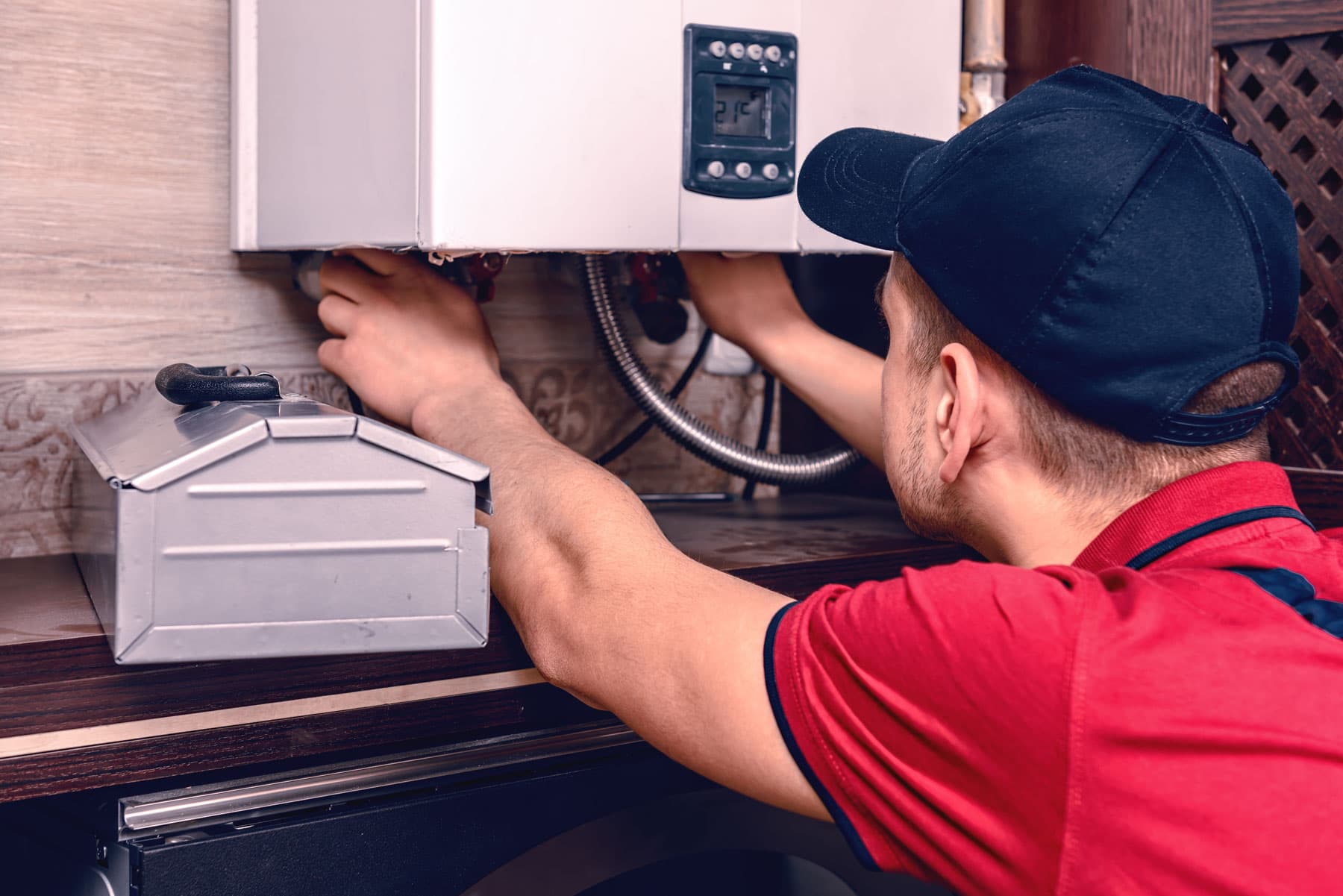
PoCo homeowners in Mary Hill and Oxford Heights with older equipment face the highest emergency risk in the Tri-Cities. We respond to no-heat calls throughout Port Coquitlam any time of year and carry common replacement parts for the most frequently serviced brands in the area. Most faults in older mid-efficiency units — igniter failures, zone valve seizures, thermocouple failures, pressure relief valve discharge — can be resolved on the first visit.
Annual Boiler Servicing
Annual servicing is the single most cost-effective way to extend the life of a PoCo home's aging boiler system. Our visit covers burner cleaning, heat exchanger inspection, combustion analysis, safety controls test, expansion tank pressure check, zone valve and circulator pump assessment, and system pressure verification. For Mary Hill homes with older cast iron equipment, we pay particular attention to heat exchanger section integrity and flue condition.
Gas Line Services
Many PoCo homes converting from oil to gas, or installing new gas appliances, need gas line work alongside the boiler job. We're licensed gas fitters certified by BC Safety Authority for natural gas installation and modification throughout Port Coquitlam. We handle the gas line, the permit, and the inspection coordination as part of the complete job.
Why Port Coquitlam Residents Call Us
- Deep familiarity with Port Coquitlam's older Mary Hill and Oxford Heights housing stock and its aging boiler systems
- Experience with 1950s and 1960s cast iron and early gas boilers common in the Mary Hill area
- Serving all PoCo neighbourhoods from Mary Hill and Birchland Manor to Riverwood and Citadel
- Crawl space moisture awareness for properties near the Coquitlam River corridor
- Same-day emergency response across Port Coquitlam for residential and light commercial calls
- Honest repair-versus-replace assessments for homeowners with aging systems in older PoCo neighbourhoods
Nearby Areas We Also Serve
FAQ
Common boiler questions
Ready to book?
Need a boiler install, repair
or servicing in Surrey?
Call us or send a message. We respond fast and give you straight answers. 4.9★ on Google · 16 reviews · 14+ years serving Surrey.